Pharmacogenetic testing and epigenetic testing are like cousins in the genetics family — both super insightful, but they focus on different things. Here’s a quick breakdown to clear it up:
🧬 Pharmacogenetic Testing
- What it is: Tests how your fixed genetic code affects your response to medications.
- Focus: Looks for inherited gene variants that influence drug metabolism, effectiveness, and risk of side effects.
- Use case: Helps doctors choose the right drug and dose for you — think personalized medicine at its finest.
- Example: Some people metabolize antidepressants or blood thinners faster or slower because of their genetics; pharmacogenetic testing spots that so treatment can be tailored.
- Fixed: Your DNA sequence doesn’t change, so results are stable for life.
🧬 Epigenetic Testing
- What it is: Measures dynamic chemical tags (like methylation) on your DNA that regulate gene expression based on lifestyle, environment, and age.
- Focus: Reveals how your genes are currently “turned on or off” — biological age, inflammation, stress response, and more.
- Use case: Guides lifestyle changes and biohacking to improve health, longevity, and aging.
- Example: Your diet, sleep, and stress can cause epigenetic changes that speed up or slow down aging markers.
- Dynamic: Your epigenetic profile can change over time with your choices and environment.
TL;DR
Pharmacogenetics = Your fixed genetic blueprint for drug response.
Epigenetics = Your flexible gene expression landscape influenced by your lifestyle and environment.
The Big Bicture on Pharmacogenetic vs. Epigenetic Testing
When to use each, what results mean, benefits/drawbacks, overlap, and how they can each boost your life. Think of it like choosing between two superhero tools for your health toolkit. 🦸♀️🧬🦸♂️
1. When Would You Use Each?
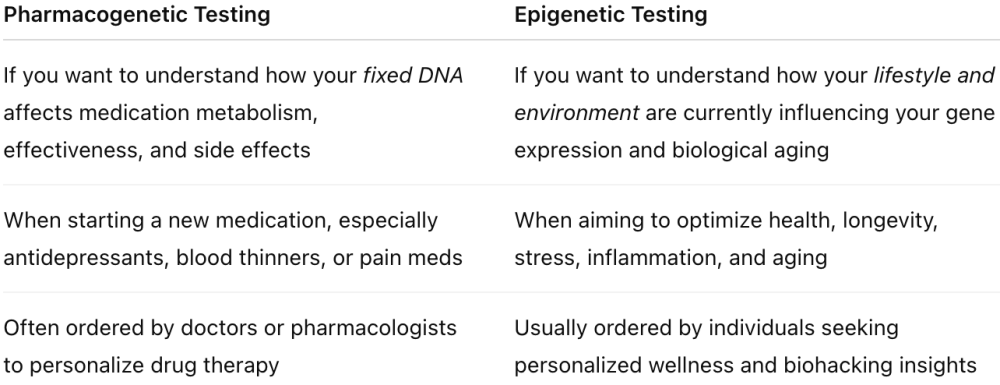
2. What Do the Results Mean?
- Pharmacogenetic:
Your test reveals genetic variants (SNPs) that affect enzymes like CYP450, which metabolize drugs.- Results tell you: Are you a fast or slow metabolizer?
- This affects dosing and drug choice to minimize side effects or maximize efficacy.
- Epigenetic:
Your test shows patterns of DNA methylation indicating biological age, inflammation, stress levels, and gene regulation.- Results tell you: How old are your cells biologically?
- Which pathways are active or suppressed?
- Where can lifestyle changes help?
3. Benefits and Drawbacks
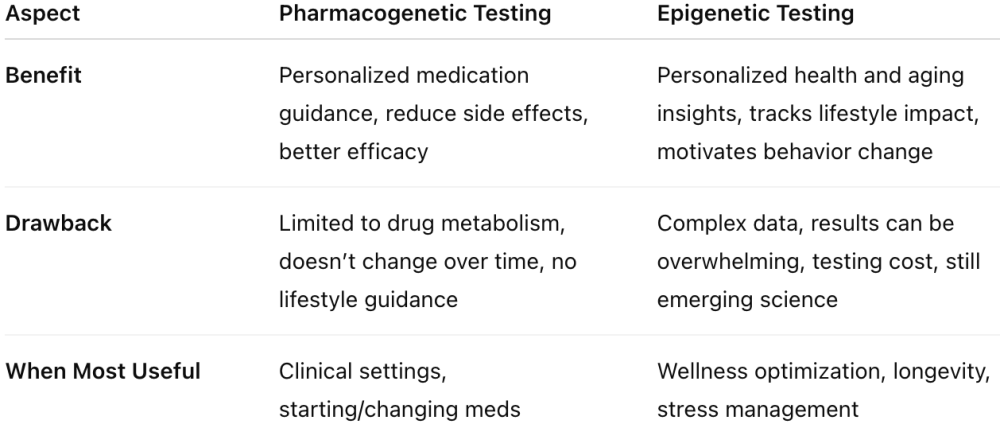
4. Do Any Companies Offer Both?
Currently, most companies focus on one or the other because the science and testing methods differ:
- Pharmacogenetic testing: Offered by companies like GeneSight, 1upHealth, and Invitae.
- Epigenetic testing: Offered by TruDiagnostic, Chronomics, and others.
Some advanced health platforms are starting to integrate both genetic and epigenetic data for a holistic view, but these are usually through specialized healthcare providers, not standalone consumer kits.
5. How Can They Improve Your Life?
- Pharmacogenetic Testing
- Makes your medication use safer and more effective.
- Saves time and frustration by avoiding trial-and-error prescribing.
- Reduces risk of adverse drug reactions.
- Epigenetic Testing
- Empowers you to make lifestyle choices that actually impact your cellular health.
- Provides motivation and feedback for behaviour change.
- Helps you slow aging and reduce disease risk through personalized strategies.
6. When Is Each Important?
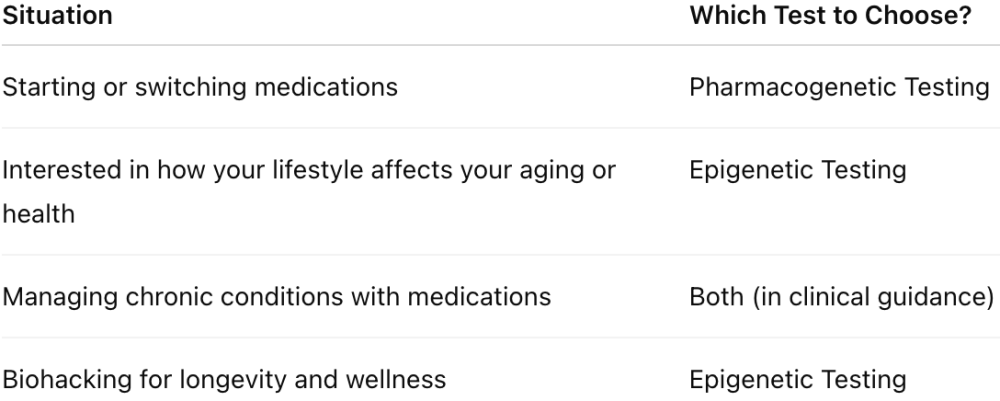
Think of pharmacogenetic testing as a GPS for your medication journey — it tells you the best route to avoid crashes and detours. Epigenetic testing is more like a dashboard showing how your engine is running — temperature, speed, and efficiency — guiding your maintenance and upgrades.