If you’re ready to improve your health then let’s chat about lifestyle interventions that have shown the strongest and most measurable impacton epigenetic markers and biological age according to current research. 🧬⏳
🌟 Key Interventions That Shift Epigenetic Test Results
Researchers and biohackers alike have been tracking which lifestyle choices most reliably lead to younger biological age, healthier gene expression, and improvements in longevity markers like DNA methylation patterns.
Here’s the science-backed lineup of the most effective interventions — with some juicy details under each:
🥦 1. Nutrient-Dense, Anti-Inflammatory Diet
Impact: HIGH
Changes Seen: In as little as 8 weeks
In several studies — including the landmark FASTER study (Fitzpatrick Aging Study) — people who followed a plant-forward, low-glycemic, methylation-supportive diet saw biological age reversal of 1–3 years within 2 months.
Key dietary features:
- High in leafy greens, cruciferous veggies, berries, and herbs
- Rich in polyphenols (like curcumin, quercetin, green tea catechins)
- Includes healthy fats (like omega-3s from fish/flax)
- Low in sugar and processed carbs
- Includes foods rich in methyl donors:
- Folate (spinach, lentils)
- Choline (eggs, broccoli)
- B12 (animal products or supplements)
- Betaine (beets)
These nutrients are crucial for methylation — a core epigenetic mechanism that influences gene expression.
💡 Bonus tip: The “Younger You” program by Dr. Kara Fitzgerald is based entirely on this approach and includes test-backed outcomes.
🏋️♀️ 2. Physical Activity (Especially Resistance & HIIT)
Impact: HIGH
Changes Seen: 4–12 weeks
Exercise doesn’t just tone your body — it literally reprograms gene expression.
Effective exercise types:
- Resistance training: Enhances DNA repair, reduces pro-aging methylation patterns.
- HIIT (High-Intensity Interval Training): Improves mitochondrial biogenesis and youthful gene expression.
- Aerobic exercise: Reduces inflammation and supports cellular regeneration.
In studies, consistent exercise reduced age-accelerating methylation markers and improved telomere length (another biological aging signal).
🧠 Also improves expression of genes tied to brain health and mood regulation.
😴 3. Prioritizing High-Quality Sleep
Impact: MODERATE to HIGH
Changes Seen: Weeks to months
Poor sleep has been linked to accelerated epigenetic aging, while restorative sleep supports genes involved in repair, detox, and immune regulation.
Sleep improvements that help:
- Regular sleep/wake times (circadian rhythm optimization)
- Getting 7.5–9 hours per night
- Reducing blue light and screen time before bed
- Deep sleep tracking with wearables (e.g., Oura, WHOOP)
Chronic sleep debt even alters methylation of genes related to inflammation and cognitive decline — yikes.
🧘♀️ 4. Stress Reduction and Mind-Body Practices
Impact: HIGH
Changes Seen: Within 8 weeks
Stress is an epigenetic bulldozer. Cortisol and adrenaline overexposure cause changes in immune-related and inflammation genes, and increase biological aging.
Effective stress reducers:
- Mindfulness meditation (even 10–15 min/day)
- Breathwork (especially slow, diaphragmatic breathing)
- Yoga, tai chi, or qigong
- Journaling or gratitude practice
- Time in nature (literally deactivates inflammatory genes!)
🧘 Research shows downregulation of pro-inflammatory gene clusters and improved methylation patterns after just a few weeks of daily mindfulness or meditation.
🌞 5. Strategic Light Exposure
Impact: MODERATE
Changes Seen: Ongoing benefits
Morning sunlight and avoiding blue light at night both affect the CLOCK genes that control your circadian rhythm — a major regulator of epigenetic expression.
Easy wins:
- 10–20 min of outdoor light exposure before 9 a.m.
- Reducing artificial light after sunset
- Optional: Red-light therapy (studies show possible benefits to mitochondrial and skin-related gene expression)
Think of light as a daily epigenetic switch — either syncing your body or throwing it off.
💊 6. Smart Supplementation
Impact: MODERATE to HIGH (depending on deficiencies)
While food should be the foundation, certain supplements can support methylation and reduce inflammation — key levers in epigenetic control.
Commonly used:
- Methylated B-complex (folate, B12, B6)
- Vitamin D3 + K2
- Omega-3s (EPA/DHA)
- Magnesium
- Curcumin, resveratrol, quercetin (anti-inflammatory polyphenols)
🧬 CAUTION: Over-supplementing methyl donors (like folic acid or SAMe) without testing can backfire — best used with guidance if going deep.
🚭 7. Avoiding Toxins
Impact: HIGH
Changes Seen: Slower, but powerful over time
Exposure to heavy metals, BPA, air pollution, cigarette smoke, and pesticides all leave lasting epigenetic marks — often related to inflammation and disease risk.
Detox-friendly changes:
- Choose organic when possible (especially “Dirty Dozen” foods)
- Use natural personal care and cleaning products
- Filter your drinking water (look for VOC, heavy metal, and fluoride filters)
- Quit smoking or vaping (epigenetically age-reversing over time)
Even air quality indoors can affect your epigenome. Opening windows = gene expression win.
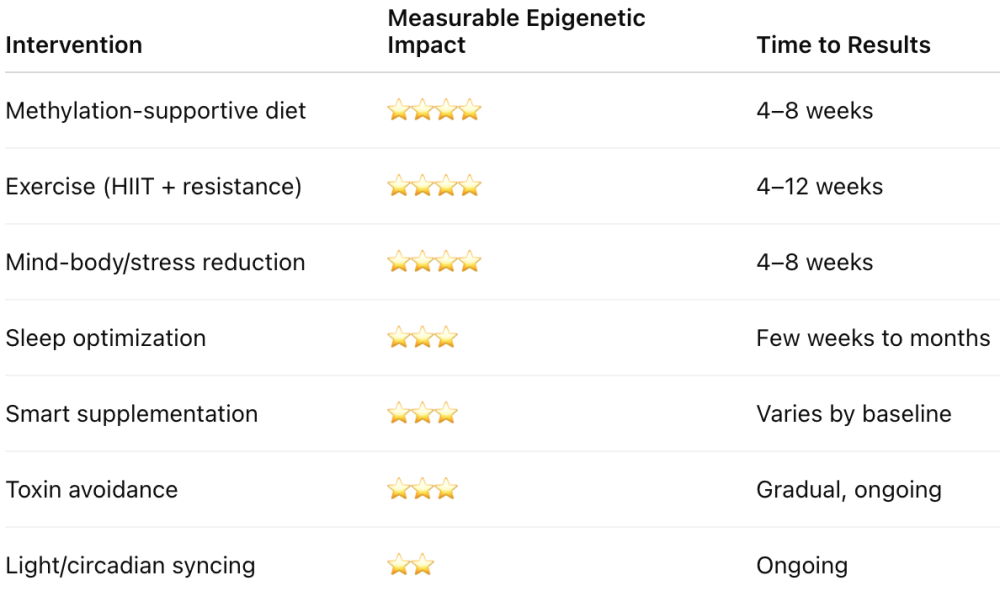
🧬 Summary Chart